If you’ve spent much time out at campgrounds, you already know the water quality can be pretty unpredictable from one place to the next. Some state parks have excellent water, but others might serve up water that tastes funny, has a yellowish tint, or just isn’t something you want to fill your glass with. For weekend or two-week getaways in your RV, travel trailer, or fifth wheel, a good water filter or purifier makes a difference you’ll appreciate every day. Here’s my breakdown to help you sort through your options and pick out what works best for your style of camping.
Why Water Filters and Purifiers Matter for Campers
Drinking water on the road isn’t always as reliable as at home. Pipes at campgrounds can be old, water sources might pull directly from wells, and infrastructure in remote spots is often minimal. The right water filter prevents those mysterious floaties in your glass, helps with odd smells, and takes out sediments that can gunk up your onboard system. Some folks go a step further and use a purifier for extra defense against bacteria and viruses. That’s especially useful if you camp in places with untreated water sources or your boondock off the grid.
Most campgrounds in the US and Canada say their water is safe, but equipment maintenance and testing can be inconsistent. A good filter brings peace of mind and better taste, and a purifier protects you and your family from the stomach bugs nobody wants during a road trip. It’s comforting to know that no matter where you end up parking, you’ll have access to water that tastes fresh and is safe to drink or cook with.
Types of Water Filters and Purifiers for RVs
Since not all water supplies are the same, water treatment products come in a few varieties. Here’s a look at the main types you’ll run into as a camper:
- Inline Canister Filters: These screw directly onto the water hose outside your RV. They’re easy to use and pretty affordable. They handle sediments, chlorine, and some taste and odor problems. They don’t usually take care of bacteria or viruses.
- Countertop Filters: These sit inside the RV and work by gravity or a hand pump. They filter out particles and, depending on the brand, also remove bacteria, cysts, and even some chemicals.
- Under-Sink Systems: These are installed under the RV sink. They offer multiple stages of filtration and do a thorough job on taste, odor, and most contaminants. Some even use a UV light or ceramic stage for a purifying edge.
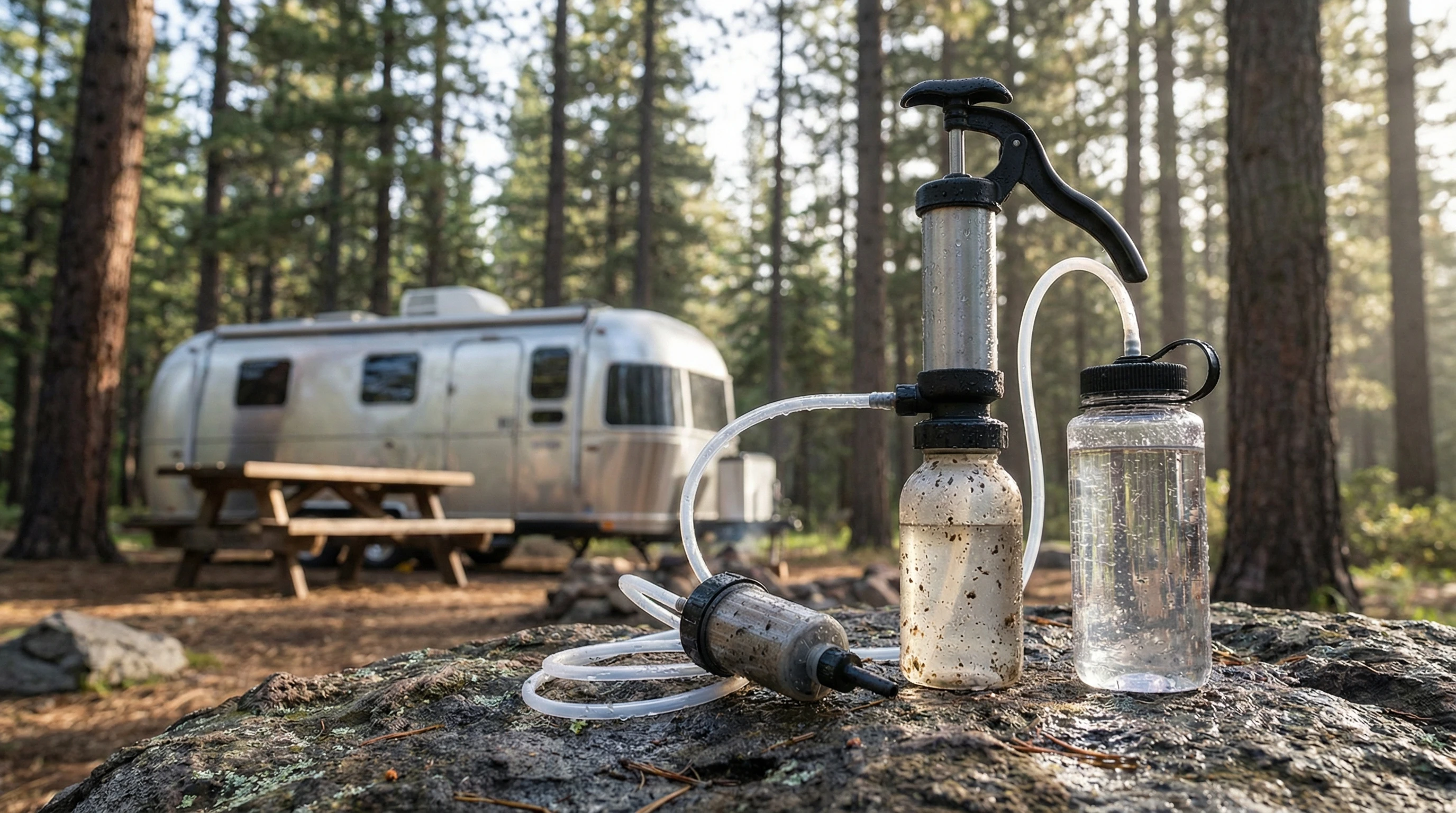
- Pump Purifiers and Filter Bottles: If you’re off hiking or boondocking with untreated streams nearby, portable pump purifiers and filtered water bottles come in handy. They’re designed for solo use or backpacking but work as a good backup plan for RVers camped far from hookups.
- UV Purifiers: For virus protection, small UV light purifiers zap microorganisms in your water. These work well as a final step when you’re extra concerned about biological contaminants.
How to Choose Between a Filter and a Purifier
The main difference is in what they remove. Most filters handle particulates, chlorine, sediment, and some bacteria; purifiers target the invisible stuff like viruses, smaller bacteria, and protozoa. For most developed campgrounds in the US and Canada, a solid filter is plenty. If you travel south of the border or fill from untreated lakes and streams, a purifier is worth the investment.
Here are a few questions to help you figure out what’s best for your trips:
- Are you mostly in established parks with city water? An inline hose filter or under-sink system fits the bill nicely.
- Do you ever boondock, dry camp, or fill from wells and streams? Look for a filter recognized for removing bacteria (labeled NSF/ANSI 53 or 58) and consider a purifier with UV or chemical treatment for viruses.
- Is taste a big deal to you? Multistage filters with carbon elements make water taste better by removing chlorine and reducing sulfur odors.
- Do you need speed and convenience? Inline filters take seconds to connect before filling your tank, while countertop gravity filters need a few minutes for a full pitcher.
Quick Guide: Getting Clean Water in Your Camper
- Install Your Inline Filter: Hand-tighten it onto your water hose between the campground spigot and your RV. Remember to flush out new filters for a minute before drinking from them.
- Swap Filters on Schedule: Most inline filters last a full camping season but check the recommendations for your brand. Water with heavy sediment means quicker replacements.
- Keep a Backup: Toss a portable filter bottle into your truck. It works as a backup if your main system clogs, and it’s useful for day hikes.
- Flush Your System: When you sanitize your freshwater tank every few months, run that cleaner through your lines too. This keeps everything fresh and ready for your next trip.
Stuff to Think About Before Buying
It’s easy to grab the first filter you see, but a few factors can make the difference between clean-tasting water and wasted money on gear you never use. Here’s what I pay attention to:
- Filter Pore Size: Smaller is better for catching bacteria but might slow your flow rate. A 0.2-micron filter catches most bacteria. If you’re just aiming for clear and good-tasting water, a 5-micron carbon filter does the trick for most folks.
- Flow Rate: You probably want something fast enough to fill your tank before you lose interest or patience. Gravity and countertop units are slower than hose mounted filters, so consider how much water you’ll need every day.
- Filter Replacement Cost: Think about ongoing expense. Some multi cartridge kits can get pricey over time, while inline filters are reasonable for seasonal use.
- Storage Space: Large countertop filters or purification pitchers are handy but take up valuable counter real estate in a small RV. Hose filters tuck away easily in small compartments.
Filter Pore Size – What Does It Even Mean?
I had to look this up when I got my first filter. The micron rating basically tells you how fine the filter’s screen is. A filter rated at less than 1 micron will block most bacteria while something larger (like 5 microns) is mainly for rust, sand, and dirt. If viruses or very tiny stuff are an issue, either get a filter specifically rated for that, or use an added purification method like UV.
Flow Rate vs. Water Quality
Hose filters are usually faster, filling tanks or bottles in a minute or two. Gravity-fed units promise better filtration, but sometimes you’re left waiting at the counter as the pitcher fills. For a quick weekend trip, speed can win but long stays in hot weather (when you’re going through lots of water) might make a countertop purifier appealing for that all day supply.
Filters, Chemicals, and Taste
Some purifiers use chemicals like iodine or chlorine for that last round of disinfection, but I always notice a weird aftertaste. If that bugs you, choose a filter with a big carbon stage to knock out leftover flavors and bring back that clean taste.
Handy Tips for Campground Water Safety
- Protect your hoses: Store drinking water hoses separately from your dump hoses and rinse them after each trip. Dirt can easily find its way inside and affect taste or safety.
- Clean regularly: Sanitize your fresh tank with bleach every few months. Even the best filter can’t fix dirty pipes inside your rig, so keep everything fresh from the source to your glass.
- Bring backup water: I always keep a couple of small, bottled waters on hand for emergencies. If a filter fails or the campground supply is off, it covers you for a day while you track down a solution.
- Use filtered water for cooking and brushing teeth: Don’t forget your furry friends. Pets can get just as sick as us from contaminated water.
Real-World Use Cases for Camping Water Filtration
- Ocean Campgrounds: Salt spray and sand mean you’ll want a filter that handles turbidity and delivers clean taste. Look for an inline filter with a solid carbon stage for the best results after salty adventures.
- Mountain State Parks: Streams are clear but may have bacteria or animal droppings upstream. Pack a portable purifier or use a double-filtration method (filter and then UV light) if you’re drinking from untreated sources. That step makes all the difference on rugged trips.
- Long Trips: Under sink systems are great for trips lasting a week or more. There’s no need to keep switching filters or topping up pitchers, and you’re set for all your fill-ups along the way.
Frequently Asked Questions
Question: Can I use a home water filter in my RV?
Answer: Stick to products meant for RV and outdoor use. Some home filters aren’t designed to handle low water pressure or vibrations from driving. RV models are made for bumpy travels and quick connections so you stay worry-free.
Question: How long do water filters last on the road?
Answer: For inline filters, expect three to six months of use, or around 3,000 to 5,000 gallons. Countertop and pump filters depend on the brand—always check the specs, and remember heavy sediment shortens filter life.
Question: Is a filter enough at most campgrounds, or should I add a purifier?
Answer: For city water, a good inline or under-sink filter works great. When filling from streams, springs, or if the supply is questionable (especially in remote places), a purifier or double-filtration system is worth considering to keep everyone healthy.
Wrapping Up
Adding a water filter or purifier to your camping kit is a quick, practical upgrade that pays off every day, whether you’re just rinsing veggies, filling water bottles, or brewing coffee at the lakeshore. The right system depends on where you camp, how long you’re out, and how much hassle you want to avoid. If you start with a simple inline filter for most campgrounds, you can always add a portable purifier for wilder adventures down the road. Clean water on the go really is something you’ll appreciate on every trip and ensures your outdoor adventures are comfortable and safe. Don’t overlook the little upgrades like water filtration—they make every stop along your route more enjoyable and keep your RV lifestyle rolling smoothly.