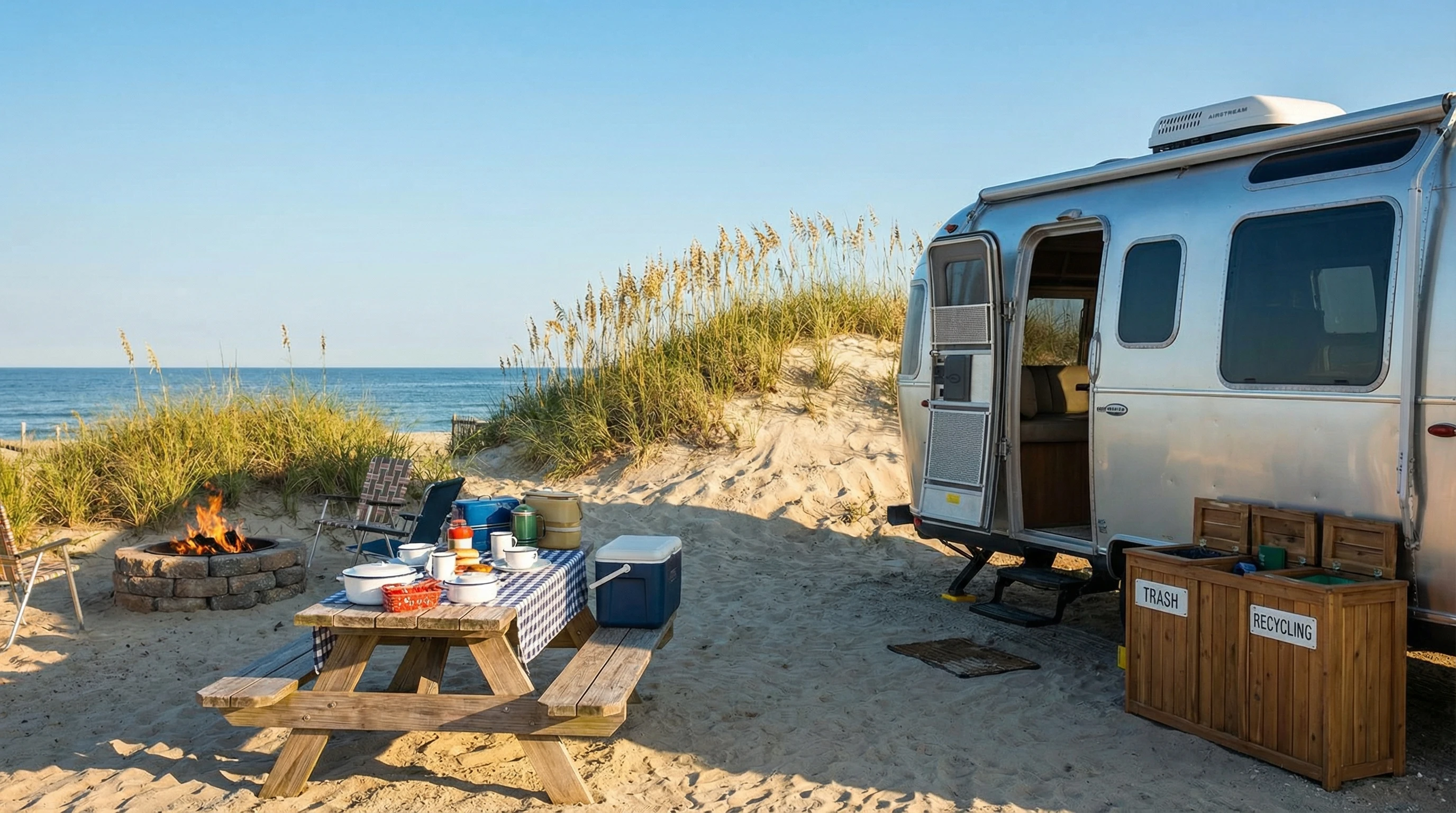
Managing food and waste in the wild is a huge piece of the camping puzzle, especially for families or couples rolling into oceanfront campgrounds in their RVs or travel trailers. When I’m out with the crew, cracking open coolers, prepping meals, sneaking snacks to the kids, and packing lunches for hikes or long sandy beach days, figuring out what to bring, how to store it, and where the trash goes really affects both the comfort of the trip and the experience for everyone around us. Keeping our site clean also means we’re doing our part to take care of the wild places we love visiting.
Planning Food for Family Beach Camping
Putting together a smart meal plan can turn mealtime into a highlight instead of a hassle. Over the years, I’ve learned what works (and what tends to spoil) when you’re camping on the coast with a salty breeze and unpredictable weather.
Keep things practical and delicious, but not too complicated. We love prepping the basics, like grilled veggies, easy proteins, snacks in reusable containers, and at least one sweet treat for s’mores. Since water and ice are always at a premium, we minimize foods that need constant refrigeration and pack dry goods like nuts, crackers, granola, and shelfstable oat milk. Marinated chicken or kabobs in ziptop bags work great because they’re easy to cook and don’t need a ton of cleanup.
Beach air seems to give everyone a healthy appetite, so I always pack more fruit, trail mix, jerky, and cheese sticks than I think we’ll need. If we’re exploring nearby towns, picking up some fresh local seafood or produce can keep meals interesting, too. For breakfast, we often pack oatmeal packets and hardboiled eggs, which keep well without refrigeration. Easy bagel sandwiches also make for simple, satisfying lunches by the water.
Essential Gear for Food Storage and Waste Management
Good food storage is key on any trip, but it’s really important by the ocean where critters, like raccoons, seagulls, and even the super bold squirrels, are always scouting for an easy handout. Here’s a list of gear I never leave behind:
- Coolers with locking lids: I use one for things that need to stay cold (meats and dairy) and a second for drinks, since that one gets opened more often and melts ice faster.
- Stackable food tubs: Keeps everything organized and stops random chips or cookies from getting soggy if there’s morning dew or spray from the ocean.
- Reusable produce bags and containers: Way easier to pack out, plus less single use plastic on hand.
- Scentsafe trash bags: These are handy if you’re boondocking or if the campground bins are far from your site.
- Dish tubs and biodegradable soap: Needed for quick cleanups so nothing gets left for wildlife or blows away into the dunes.
Storing all food and scented items inside the RV or in a locked vehicle is a simple habit that keeps raccoons from dragging half your kitchen across the sand at night. If you’re in a tent or popup, hanging food from a tree (using a bear bag system) or sealed container is the way to go. During summer months, adding an insulated bag for veggies and fruits helps keep them fresh.
Step-by-step Food and Waste Management Tips
Getting a system down is super important so you aren’t scrambling while everyone’s hungry or tired out from a day of beach hikes and surf sessions.
- Plan meals with less waste: Cut and prep at home, so things like peeling carrots and portioning snacks ahead of time save space and mean less to toss at camp.
- Separate your trash: Have a garbage bag for food waste, another for recyclables, and a small container for compostables if your campground has facilities.
- Cook only what you’ll eat: Leftovers can go bad quickly if you don’t have reliable refrigeration, and tossing food out is a magnet for critters.
- Clean up fast after meals: Wipe down tables, rinse dishes with warm water and biodegradable soap, and make sure all scraps are put away or tossed in the right bin.
- Pack out what you brought: Even if the campground has dumpsters, bring your own trash away from the beach and hiking spots. I usually keep a dedicated bag in the truck in case the bins are full or we stumble upon a spot with no facilities.
Staying flexible with meals is helpful, especially if plans change. If you end up extending your stay, having some backup pantry meals and extra bags for trash will save you a lot of hassle.

Common Challenges with Family Camping by the Coast
Camping on the oceanfront offers up some unique wins, but also a few challenges if you haven’t dealt with salty weather, wind, and wildlife before. Here are a few things to keep in mind:
- Humidity and condensation: Moisture can sneak into food containers and make crackers or bread go stale. Double bag snacks or stash them in waterproof containers.
- Sand and salt: Both tend to get everywhere. Keep kitchen areas swept, use tablecloths, and rinse hands before eating, especially if you’ve been digging in the sand with the kids.
- Wind gusts: Those ocean breezes can knock over plates or scatter napkins everywhere. Weighted items, covered serving dishes, and cloth napkins are handy for keeping things in place.
- Critters and pests: Raccoons, gulls, and sometimes even feral cats are known to raid unguarded campsites. Use locking bins and clean up food right away.
Dealing With Unexpected Issues
If a storm rolls in or a cooler break, making quick decisions about which foods to eat first keeps waste to a minimum. Spoiled food should be double bagged and sealed up tight until you’re able to dispose of it properly. Also, if you find that your meal plan is offtrack, it’s okay to switch up meals on the go. Using up perishable foods first cuts down on what gets wasted if the weather takes a turn.
EcoFriendly Waste Practices for Oceanfront Campgrounds
Being close to the sea really brings home how important it is to protect this environment. Keeping trash out of the dunes and ocean is more than just following the rules. It protects the wildlife and keeps the beach clean for the next campers, too.
- Use compostable plates and utensils when possible or just stick with reusable gear. Washing up at camp is easier than hauling out a bag of dirty paper plates.
- Only pour used water from dishwashing at the campground sanctioned spot (usually labeled as a “grey water dump area”) rather than on the ground or into the sand.
- Recycle everything that’s accepted locally. Lots of campgrounds have signs posted or maps that show where recycling bins are by the entrance or bath houses.
I also keep a little mesh bag clipped to our gear for picking up small bits of trash we find along the trail or beach. It’s a small thing, but it adds up when everyone does their share. Kids love helping out with this—one neat tip is to do a “trash treasure hunt” with prizes for whoever finds the most litter. This keeps the area clean and makes it a fun game. You’d be surprised what ends up on the sand after a windy night!
Frequently Asked Questions
Here are some of the main questions that pop up when we meet fellow campers or swap tips at the beach:
How do you keep food safe from wildlife by the beach?
Answer: Store all food and scented items in coolers with locking lids or inside the RV or tow vehicle at night. Always clear off the picnic table before heading out for beach activities, so nothing gets left as a target for raccoons or birds.
What’s the best way to reduce food waste during a long weekend trip?
Answer: Prep and portion food at home, bring only what you’ll use, and stick to meals you know everyone likes. Using up leftovers for lunch the next day, or repurposing veggies into a quick stir-fry or wrap, helps cut down on what needs to be thrown away.
Is it OK to bury biodegradable waste in the sand?
Answer: Nope, burying any waste on the beach or dunes can attract animals or end up washing out to sea. Always use designated trash bins or take it with you until you find proper disposal.
Last Words on Food and Waste for Happy Camping
Figuring out food and waste management makes the entire camping experience smoother, not just for your family, but for everyone else sharing the wild coast. With a little planning, the right gear, and some good habits, it’s possible to eat well, keep things tidy, and leave every place better than you found it. That means more fun at the beach, fewer pests at your site, and a cleaner, happier spot waiting for the next road trip. For tips about keeping your rig organized or reviews of the organizing gadgets I’ve tried, check out more articles right here at shamrock77camping.com.